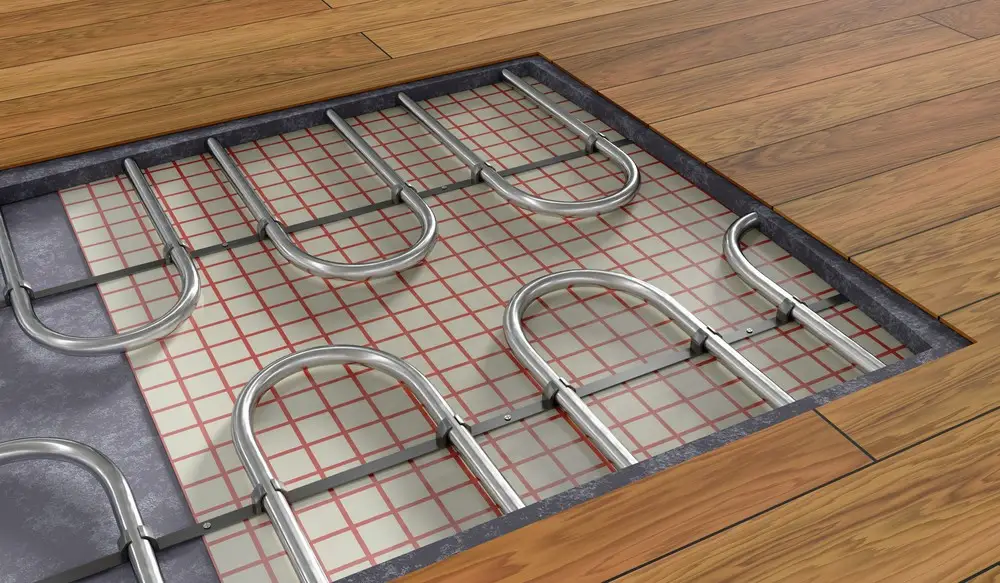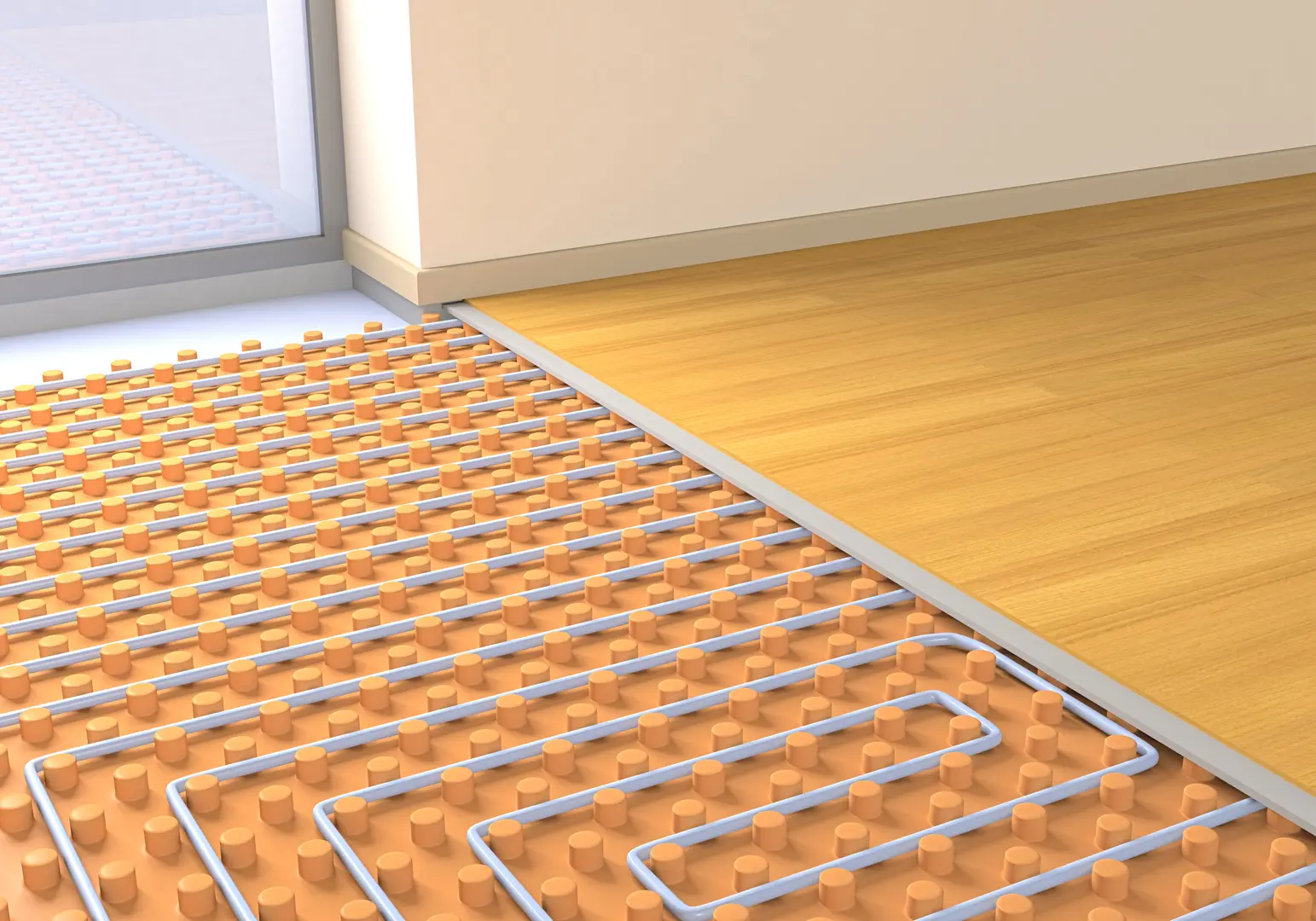
Technology is changing the way we live, and home heating is no exception. Underfloor heating (UFH) combined with smart home technology creates a seamless, efficient, and modern way to stay comfortable year-round.
Smart Control: Unlocking UFH’s Full Potential
Integrating UFH with a smart home system dramatically boosts its efficiency and user experience. Smart controls compensate for UFH’s natural thermal inertia (the time it takes to heat up and cool down).
Smart Control at Your Fingertips
Remote Access and Geofencing: With smart thermostats, you can adjust your heating from anywhere via a mobile app. Geofencing uses your phone’s location to automatically turn the heating down when you leave the area and begin warming up when you’re approaching home, ensuring optimal comfort upon arrival while minimizing waste.
Smarter Scheduling and Learning: Set your UFH to warm up just before you wake up or cool down when you’re not home. Advanced learning thermostats analyse your home’s thermal properties, local weather data, and your usage patterns to create self-adjusting schedules, preventing wasted energy while keeping your home perfectly comfortable.
Energy Savings Through Optimisation
Precision Zoning: Smart systems allow for precise zoning, meaning different rooms (zones) can be heated to independent temperatures on separate schedules. For example, the bathroom could be warmer in the morning, while the bedrooms are cooler at night.
Integration with Smart Assistants: Voice control via Alexa, Google Home, or Siri makes heating your home as simple as saying, “Warm up the living room.”
How to Choose the Best Flooring for Underfloor Heating
Planning new floors? Not all flooring materials perform the same with UFH. Choosing the right type ensures maximum comfort and efficiency by optimising the thermal conductivity and minimizing thermal resistance (measured as the tog value or R-value).
| Flooring Type | Thermal Performance | Ideal Use | Key Consideration |
| Tiles & Stone | Excellent conductors (Low R-value) | Kitchens, Bathrooms, Conservatories | Maximum heat transfer, quick reaction. |
| Polished Concrete | Excellent conductor (Low R-value) | Modern, Industrial Interiors | Extremely efficient and durable. |
| Engineered Wood | Good performance, stable | Living Areas, Bedrooms | Must be specifically rated for UFH; resist warping and gapping. |
| Vinyl & Laminate | Good, affordable options | Modern Homes, Utility Rooms | Thickness and construction are critical; must be UFH-compatible. |
| Carpet | Poorer conductor (High R-value) | Bedrooms (for warmth/feel) | Stick to thin carpets with a combined tog rating under 2.5 to avoid blocking the heat. |
The Hidden Health Benefits of Underfloor Heating
Underfloor heating isn’t just about comfort—it can create a healthier living environment for your family by changing the way heat is transferred.
Better Air Quality (Radiant vs. Convective Heat): Radiators heat air (convective heat), creating air currents that circulate dust, pollen, and allergens. UFH provides gentle radiant warmth directly to objects and people, significantly reducing dust and allergen movement—great for allergy and asthma sufferers.
No Damp or Mold Growth: Warm floors raise the dew point at the floor level. This reduces condensation and dampness, helping prevent the growth of mould and mildew—common triggers for respiratory issues.
Safer for Children & Pets: There are no exposed hot surfaces, sharp metal edges, or uncovered flames, meaning no burns or accidents. It’s one of the safest heating options for families.
Comfort & Wellbeing: Even, stable warmth promotes better relaxation, sleep quality, and overall daily comfort by eliminating temperature fluctuations.
Is Underfloor Heating Worth It? Breaking Down the Costs and Benefits
Homeowners often ask: Is underfloor heating really worth the initial investment?
Cost-Benefit Analysis
| Factor | Radiator System | Underfloor Heating (UFH) System | Explanation |
| Upfront Costs | Lower (especially for retrofit) | Higher (due to floor installation/changes) | UFH installation is more invasive and costly upfront. |
| Energy Efficiency | Lower | Higher (up to 25% more efficient) | UFH operates at a lower flow temperature (~35C – 50C compared to radiators ~65C – 75C) |
| Comfort Factor | Convective (hot spots/cold spots) | Radiant (consistent, even warmth) | UFH heats the entire surface and maintains a more comfortable vertical temperature profile. |
| Longevity | ~15-20 years | 25+ years (often lifetime of the home) | UFH pipework/cables are sealed within the floor structure, minimizing wear and tear. |
Because UFH operates at lower temperatures, it is also the ideal companion for renewable heating sources like Heat Pumps, which are most efficient when supplying low-temperature water.
Changes to Daily Living
Underfloor heating doesn’t just warm your home—it fundamentally changes how you live every day.
A Clean, Modern Aesthetic: No bulky radiators mean more architectural freedom. This “invisible” heating solution allows more room for furniture, streamlined décor, and a cleaner, less cluttered look.
The Comfort Factor: Step out of bed onto warm floors instead of icy tiles. The gentle, even heat from the ground up eliminates that uncomfortable “cold spot” feeling, providing superior thermal comfort that conventional heating systems simply can’t match.